
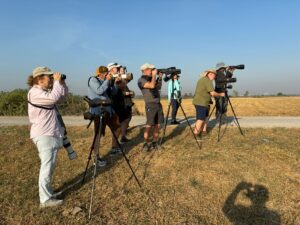
Ricefield birding
Day 3 of our Spoonful of Thailand birdwatching tour was a classic changeover day, full of transitions, surprises, and some truly unforgettable avian spectacles. After an early breakfast, we headed out to explore the Ton Manphao Paddies in Phetchaburi, and wow, the bird numbers were simply insane.
The fields were alive with activity: hundreds of Weavers, Buntings, Pipits, Storks, and birds of prey swirling around us. Every scan through the bins revealed something new and exciting—it felt like the birds were putting on a non-stop show just for us.
The undisputed star of the morning was an incredible flock of around 200 Yellow-breasted Buntings (Emberiza aureola). Their constant ticking calls filled the air, creating a wonderful soundscape over the paddies. Seeing this species has long been a personal dream of mine, and witnessing such a large gathering was pure magic. It’s especially poignant given their precarious conservation status: classified as Critically Endangered by the IUCN Red List, the Yellow-breasted Bunting has suffered a catastrophic population decline (over 90% in recent decades) largely due to habitat loss and intense hunting/trapping pressure across parts of its range, particularly during migration and wintering periods. Thailand remains one of the key wintering strongholds for the species, making sightings like this both thrilling and a stark reminder of how vital these sites are for their survival.
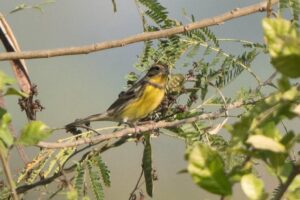
Yellow-breasted Bunting, photo by Phil Woollen
Among the raptors, we picked up two much-hoped-for Pied Harriers, several majestic Greater Spotted Eagles, and a handsome Black-winged Kite. Down in the fields, more than 50 Red-throated Pipits were feeding busily, adding yet another layer to the spectacle.
After all that excitement, we earned a well-deserved coffee break, followed by a quick stop at a shopping mall, where, incredibly, we even added a new bird to the list: a sharp-looking House Swift zipping overhead.

Our lovely fixer, Jeab, arranges tea, coffee, biscuits and cake in the field, perfect!
The real treat came next at our Indian Thick-knee stakeout. The stop paid off spectacularly with 15 of these prehistoric-looking waders showing beautifully in the open, always a crowd-pleaser with their big eyes and gangly legs. As a bonus, an Eastern Imperial Eagle soared overhead, giving us excellent views.
Lunch was fabulous, but it was rudely (and delightfully) interrupted by two Black Bazas gliding past, cue everyone leaping up from their seats, bins in hand, leaving some very puzzled locals wondering what on earth was happening!
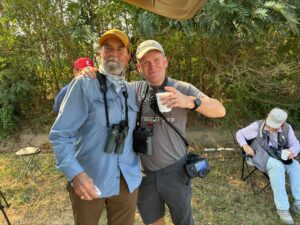
Hot coffee hits the spot!
We then arrived at our new hotel, checked in, and immediately got back to birding around the grounds. Highlights included a Brown Flycatcher, Black-naped Oriole, Hoopoes, and a gorgeous Green-billed Malkoha, a nice selection to ease us into the new location.
The afternoon crescendo came at Kaeng Krachan National Park. Our first experience there was electric. Settling into a jungle bird hide, the next few hours were mind-boggling: new species after new species, a rainbow of colours, and stunningly close views of birds that are usually tricky to see well.

Well, this bodes well …..
Standouts included Blue-winged Leafbird, Chinese and Indochinese Warblers, Black-naped Monarch, both Lesser and Greater Necklaced Laughingthrushes, Bar-backed and Scaly-breasted Partridges, Red Junglefowl, and the absolute star of the afternoon, a pair of stunning Kalij Pheasants strutting through like royalty.
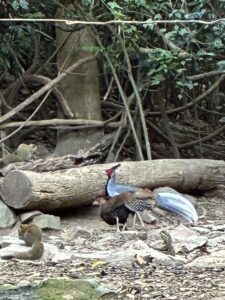
Alan’s iPhone photo of Kalij Pheasant, you get the idea!
Just as everyone was ready to head off for a well-deserved rest, a fitting finale: a pair of Oriental Pied Hornbills stuffing their beaks with bananas right in front of us.
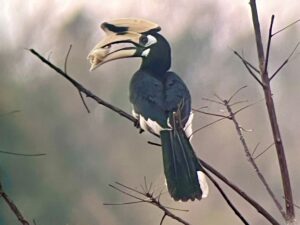
Oriental Pied Hornbill
What a day! We finished on an incredible 189 species for the tour so far. Surely tomorrow we’ll push well into the 200s? Watch this space, we shall see!